.png)
The Intersection of Mental Health and Faith Communities: Finding Support and Understanding in Papua New Guinea
- tokautblomi
- Apr 6
- 4 min read

Mental health remains a critical yet often overlooked issue in many parts of the world, including Papua New Guinea (PNG). In this diverse country, where faith communities play a central role in daily life, understanding how these communities engage with mental health challenges is essential. Faith groups often serve as the first point of contact for individuals facing emotional or psychological struggles. This post explores how mental health and faith communities intersect in PNG, highlighting personal stories, challenges, and opportunities for support.
The Role of Faith Communities in Papua New Guinea
Faith communities in PNG are deeply woven into the social fabric. Churches and religious groups provide not only spiritual guidance but also social support, education, and community cohesion. For many Papua New Guineans, faith is a source of strength and hope during difficult times.
In rural areas where formal mental health services are scarce, faith leaders often become informal counselors. They listen to personal struggles, offer prayers, and provide advice based on religious teachings. This role is vital because mental health services are limited, and stigma around mental illness remains high.
Personal Story: Miriam’s Journey Through Mental Health and Faith
Miriam, a woman from the Highlands region, experienced severe anxiety and depression after losing her husband. In her village, mental health issues were rarely discussed openly. Miriam felt isolated and confused about her feelings. She turned to her local church for help.
The pastor listened patiently and encouraged her to participate in prayer groups and community activities. Over time, Miriam found comfort in the faith community’s support. She also learned about basic mental health concepts through church-led workshops. This combination of spiritual care and education helped her regain hope and begin healing.
Miriam’s story shows how faith communities can provide a safe space for people to express their struggles and find support, even when professional mental health services are not available.
Challenges at the Intersection of Mental Health and Faith
Despite the positive role faith communities can play, several challenges exist:
Stigma and Misunderstanding
Mental illness is often misunderstood as a spiritual failing or punishment. This belief can lead to shame and discourage individuals from seeking help.
Limited Mental Health Training for Faith Leaders
Many faith leaders lack formal training in mental health. Without proper knowledge, they may unintentionally reinforce stigma or provide inadequate support.
Resource Constraints
Mental health services in PNG are limited, especially outside urban centers. Faith communities may want to help but lack access to professional resources or referral networks.
Cultural Beliefs and Practices
Traditional beliefs about spirits and witchcraft sometimes influence how mental health issues are perceived and treated, complicating the role of faith communities.
Building Bridges: How Faith Communities Can Support Mental Health
Faith communities have unique strengths that can be harnessed to improve mental health support in PNG:
Education and Awareness
Churches and religious groups can organize workshops to educate members about mental health, symptoms, and the importance of seeking help. This can reduce stigma and promote understanding.
Training for Faith Leaders
Providing mental health training to pastors and church workers equips them to recognize signs of mental illness and offer appropriate support or referrals.
Creating Support Groups
Faith communities can establish peer support groups where individuals share experiences and encourage each other in a confidential and compassionate environment.
Collaboration with Health Services
Partnerships between faith groups and health professionals can improve access to care. Faith leaders can act as bridges, guiding people to clinics or counselors when needed.
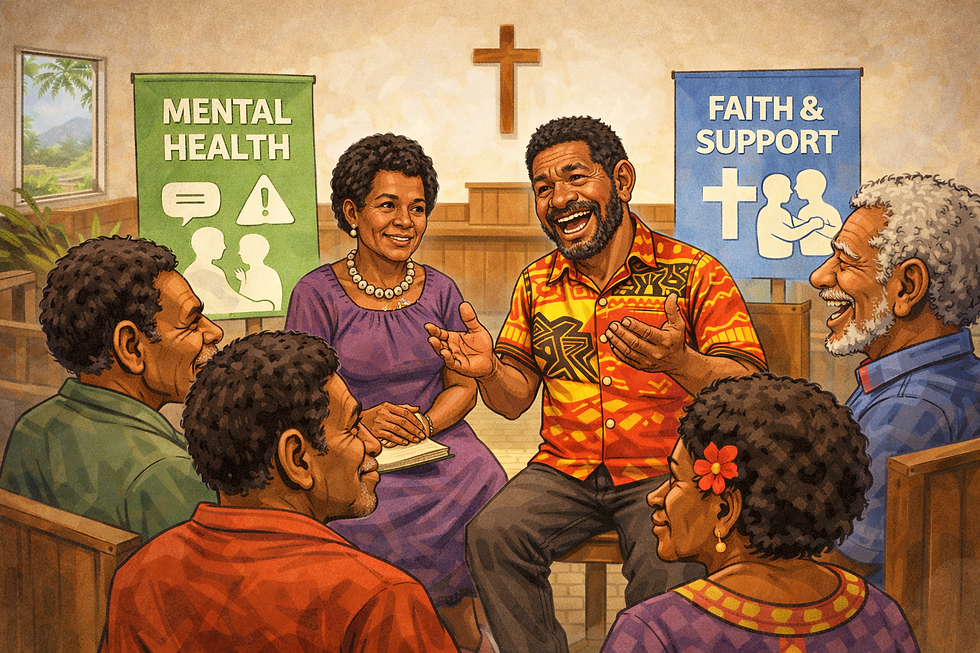
Examples of Faith-Based Mental Health Initiatives in PNG
Some organizations and churches in PNG have begun integrating mental health into their programs:
A church in Port Moresby runs a weekly support group for people dealing with depression and anxiety, combining prayer with discussions led by a trained counselor.
In the Sepik region, a faith-based NGO collaborates with local health workers to train pastors on mental health first aid, helping them identify and respond to mental health crises.
Community radio programs hosted by religious groups include segments on mental health awareness, reaching remote areas where other resources are scarce.
These examples demonstrate practical ways faith communities can contribute to mental health care in PNG.
Practical Tips for Faith Communities Supporting Mental Health
Faith groups interested in supporting mental health can consider these steps:
Listen Without Judgment
Create an environment where people feel safe to share their feelings without fear of blame or rejection.
Learn Basic Mental Health Knowledge
Understand common mental health conditions and their symptoms to provide informed support.
Encourage Professional Help
Recognize when issues require medical or psychological intervention and guide individuals to appropriate services.
Promote Self-Care and Community Care
Encourage healthy habits such as rest, nutrition, social connection, and spiritual practices that promote well-being.
Respect Cultural Contexts
Integrate traditional beliefs respectfully while providing accurate mental health information.
Moving Forward: The Importance of Community Understanding
Mental health challenges affect many Papua New Guineans, yet stigma and lack of resources often leave people isolated. Faith communities have the potential to change this by offering understanding, compassion, and practical support. By educating leaders and members, creating safe spaces, and collaborating with health services, these communities can become vital partners in mental health care.
The story of Miriam and others like her shows that healing often begins with being heard and supported. Faith communities in PNG can provide this foundation, helping individuals find hope and strength amid mental health struggles.
Supporting mental health is a shared responsibility. Faith groups, health professionals, and communities must work together to build a more inclusive and caring society where everyone can access the help they need.


Comments